

We have been rated an 'outstanding' company to work for in our latest Best Companies…
Staff Training Shines a Light on Oral Issues
Research has shown that swallowing difficulties (dysphagia), oral health and nutrition can be a problem for individuals with autism which can affect their quality of life if left unaddressed.
That’s why, here at Kisimul we put a lot of time and effort in training our staff to be more aware of, and deal with these situations effectively and safely for the benefit of the people we care for.
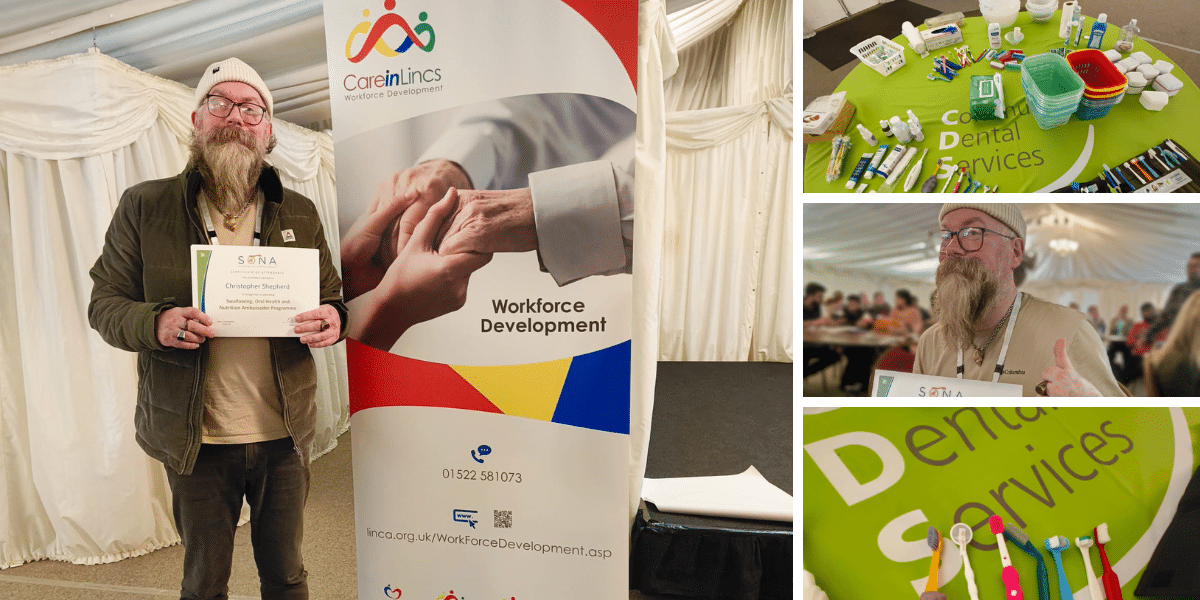
The latest member of staff to receive training on this subject was Chris Shepherd, a Senior Life Practitioner, at Tigh Allene in Lincolnshire. He attended a swallowing, oral health, nutrition ambassadors training course and successfully passed it, taking away some important learning techniques.
Chris said, “The training was a great learning experience. The main thing I’ve taken away is how closely swallowing, oral health, and nutrition are all linked, and how important it is to get all three right to keep people safe and well.
“Another key area was around the person-centred care, things like risk feeding and ensuring people’s choices and dignity are respected while still managing safety.”
Chris highlighted that by recognising signs of swallowing difficulties and how using the correct food and fluid textures early on, can reduce risks like choking and aspiration.
He will now use the knowledge gained to create a small presentation for the staff at Tigh Allene and An Caladh so it can be implemented into our services to ensure the people we care for are receiving excellent oral health and swallowing support!
He added, “The training highlighted how important oral care is not just for comfort, but for preventing infections and supporting overall health and wellbeing. I’ve got a fantastic video that I’m going to break down and share about oral care and how to brush other people’s teeth because it’s slightly different to when we brush our own. I’m looking forward to putting this into practice and sharing what I’ve learned.”
We recently staged a webinar about dysphagia to help educate people on the issue and highlight how our support is integrated into people’s individual care plans.

Related Posts