


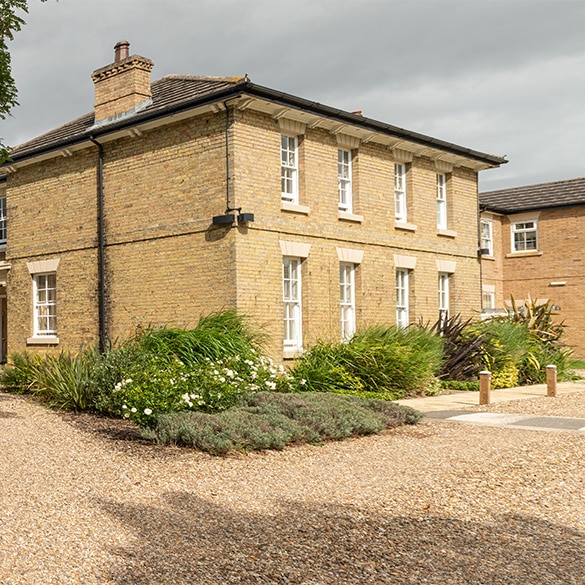

Acacia School
The school is a DFE registered Independent Special school offering full-time education programmes for up to 38 weeks of the year. We are a provision for neurodivergent children and young people with severe and complex learning disabilities, from ages 11 to 19.
Welcome
The school is located in Friesthorpe, a small village about 10 miles north of Lincoln. Class sizes are small, reflecting the unique profile of our learners. Our children have communication and sensory regulation needs that often require a bespoke and individualised approach to learning and engagement, We use a therapeutically informed model, and consistency of approach is fundamental to our success.
Integrated therapeutic teams are part of the core support in the school. This provides personalised and dynamic support for communication, sensory regulation and formulation of behavioural strategies through co-ordinated Speech and Language, Psychology and Occupational Therapy. This therapeutically informed approach assists with the generalisation of learning skills and the acquisition of meaningful life skills and functional communication.
“The curriculum sets out individual pathways for neurodivergent pupils. Pupils develop their understanding of themselves and the world around them through themes such as functional skills, culture and community, independence and creativity. Leaders have designed schemes of work in relation to each curriculum area which balance a personalised approach with an ambition about what pupils can achieve.” (Ofsted Inspection Report Nov 25)

Our approach
We take a personalised approach to learning for each child and young person in the school. The school is lucky to have access to various outside spaces which enable additional options for children who made need additional time to regulate in quiet spaces or to access physical exercise. The teaching teams support small class sizes and work in conjunction with the integrated therapeutic teams to ensure an evidence based approach to individual support plans. Outcomes are linked to the child’s EHCP and brought to life through a semi-formal curriculum that focussed on functional skills, Independent Living Skills, Creativity and Physical and Mental Well-being. Learning is provided in context and through practical activity such as cooking, vocational learning within animal husbandry or through sensory based learning experiences.
We offer day placements for children from a number of placing authorities, and admissions to the school follow a detailed assessment process to ensure support is targeted appropriately. Some children who attend the school access integrated placements within the group’s local children’s homes.
Meaningful Life ethos
The school supports the Kisimul ‘Meaningful Life’ model that underpins how the group work with young people. Every young person has an individualised plan with bespoke goals that span home and school life to encourage maintenance and generalisation of skills. In addition, leaders have developed a set of school aspirations that drive their work as non-negotiables for our education:
- Informed and evidence-based pedagogy, underpinned by high quality CPD.
- Aspirational expectations for all learners, of all abilities, across all curriculum areas.
- Authentic neurodiversity stemming from an inclusive culture.
- The curriculum is connected, coherent and sequential, building skills and knowledge over time.
- Functional skills (core literacy and numeracy knowledge) are both discretely taught and linked to the wider curriculum and real-life contextual experience.
- Data collection is purposeful and prioritised to that which impacts on outcomes for children.
- Consistent and invested staff, whose own well-being is supported and prioritised.
- Therapeutic input is focussed on enabling access to education and supports the wider curriculum.
- Shared outcomes and connected integration between education, therapy and children’s home for those within KG residential provision.
Children are safeguarded effectively because there is a transparent culture and understanding that it ‘could happen here’.
Facilities
We have seven classroom bases, all with access onto the outside spaces surrounding the school. This space is extensive and has access to swings and trampoline areas for regulation and physical input. The site benefits from being in a quiet rural location, and there are good links to local community facilities and Lincoln city centre.
A central feature of the school is the onsite animal husbandry provision. This is a smallholding where vocational learning and sensory input are incorporated into the curriculum. Young people can access vocational work, reinforce their functional learning skills through real life, work-based tasks in safe environment, or enjoy a more sensory experience interacting with the animals. We have sheep, goats, small animal petting area, an aviary and various ducks, geese and chickens of many varieties, with specialist staff on hand to support access and ensure appropriate welfare.
There is an immersive and sensory room facility within the school building, alongside a teaching kitchen and additional spaces that can be used for smaller group work or individual therapy input.
Curriculum and outcomes
We have a personalised approach to teaching our curriculum, which is a semi-formal outline based on five main areas learning and a thematic approach, rather than subject specific.
These are:-
- Communication language and literacy
- Creative learning
- Life skills
- Physical and mental well-being
- Cultural and community learning
Our young people are supported by personalising learning intentions, and our assessment systems use evidence from all aspect of the waking day. This ensures we are utilising education, therapy and care evidence as well as parent and professional feedback. We aim for a consensus on progress, as well as using standardised assessment tools and autism specific measures.
Destination Data for Lincs Schools 2023/24
Destination Data for Lincs Schools 2024/25
Activities
The school has an ethos of encouraging ongoing integration within the local community. Our staff teams ensure that each young person joins some form of community activity each week. Such activities may include using the local swimming pool, shopping visits, bus and train rides, walks, bowling and trips to the cinema. Recently this has also included residential expeditions as part of our Duke of Edinburgh accreditation.
Staff & Therapeutic Services
Staff within the school have specialist qualifications in meeting the complex needs of our young people. This knowledge is supplemented by continuing professional development in autism, SEN pedagogy and effective communication training. Positive reinforcement strategies are encouraged throughout the school, which includes recognising and responding to appropriate behaviour, minimising feedback for negative behaviour and following personalised plans for behaviour, communication and sensory regulation.
Each young person’s language and communication is assessed by the Speech and Language Therapy team, to identify a personalised communication programme that we aim to consistently apply across all settings. Visual symbols, objects of reference and photographs are widely used in a variety of contexts to promote our young peoples’ understanding and enhance their learning.
We use input from Occupational Therapy services to ensure that young people are regulated and ready to learn, and incorporate elements of programmes such as physical or vestibular input as functional components of our curriculum. Our team will also advise on functional skills, elements of access and mobility, personal care, and motor skills input.
Our psychology team support with understanding the function of behaviour and communication, and in providing input for engagement and strategies for supporting effective learning outcomes. This team co-ordinate and update support plans for our young people following multi-disciplinary meetings where there are concerns about engagement, mental well-being or behavioural issues. See more information on our Therapeutic Services here.
Safeguarding
Safeguarding and child protection is everyone’s responsibility. The school aims to ensure that:
* Appropriate action is taken in a timely manner to safeguard and promote child/young person/young people’s welfare
* All staff are aware of their statutory responsibilities with respect to safeguarding
* Staff are properly training in recognising and reporting safeguarding issues
Some children/young people have an increased risk of abuse, and additional barriers can exist for some young people with respect to recognising or disclosing it. We are committed to anti-discriminatory practice and recognise children/young people’s diverse circumstances. We ensure that all children/young people have the same protection, regardless of any barriers they may face.
Our policy and procedures also apply to extended school and off-site activities.
Regulatory
The school was registered as an Independent Special School in January 26. You can read our pre-registration inspection report here:
Acacia School – Open – Find an Inspection Report – Ofsted
The school has received no formal complaints in 2025/26 to date.
Term dates
The school operates a conventional three-term school year over 38 weeks of full-time education.
Term Dates from September 2025-July 2026
Term Dates from September 2026-July 2027
Policies
- DP02 Data Protection Policy and Procedure
- EDAC02 Safeguarding and Child Protection Policy and Procedure
- EDAC03 Admissions Policy and Procedure
- EDAC04 Attendance Policy and Procedure
- EDAC05 Behaviour Policy and Procedure
- EDAC06 Suspension and Exclusion Policy and Procedure
- EDAC08 Anti-Bullying Policy and Procedure
- EDAC09 SEND and Inclusion Policy and Procedure
- EDAC10 Equality, Diversity and Inclusion Policy and Procedure
- EDAC11 Curriculum Policy and Procedure
- EDAC13 Relationships, Health and Sex Education Policy and Procedure
- EDAC15 Complaints Policy and Procedure
- EDAC17 First Aid and Medication Policy and Procedure
- EDAC21 English as an Additional Language Policy and Procedure
- EDAC22 Remote Education Policy and Procedure
- HS01 Health and Safety Policy and Procedure
Contact details
Head Teacher: Terry Lawson
Terry.Lawson@kisimul.co.uk
Kisimul Upper School (Acacia)
Shortwood Lane
Friesthorpe
Lincoln
Lincolnshire
LN3 5AL
Tel: 01673 880022